
Greenland isn’t in the EU—but its people are, explained by an international affairs expert
by Marcus Brand
The controversy about Greenland has made me realize that while I knew that ‘Greenland isn’t in the EU’, I didn’t fully understand their relationship. So I read up on it and here’s my attempt at summarizing what I now understand.
Greenland is part of the Kingdom of Denmark, but not part of the European Union (EU). When Denmark joined the European Community (EC) in 1973, Greenland joined automatically too. But after gaining home rule, Greenland held a referendum in 1982 and decided to leave the EC. The withdrawal took effect in 1985, driven largely by concerns over control of fisheries and local self-determination. Since then, Greenland has occupied a very specific and unusual position.
Greenland’s unique relationship with the EU
Today, Greenland is classified as an Overseas Country and Territory (OCT) associated with the EU. This is not the same as being an EU member, and it is also not the same as being in the European Economic Area (EEA), like Norway—or Schengen (of which Denmark is a member).
OCT status means Greenland is outside the EU’s legal and economic core, but linked to it through cooperation and partnership. EU law generally does not apply in Greenland—which is outside the single market and the customs union, and outside EU policies on agriculture, fisheries, competition, VAT, and free movement. EU rules only apply where Greenland explicitly agrees to them through specific treaties.
Greenland has no political representation in the EU. It does not elect Members of the European Parliament. In other words, Greenland does not participate in EU decision-making. In my understanding, EU defence and foreign policy don’t apply to Greenland either. (I personally wish it did, but I don’t see a current legal basis for it.)
Greenland is outside the EU’s Common Foreign and Security Policy and its defence structures. EU sanctions, missions, and defence initiatives don’t apply there as EU law. Security and defence remain the responsibility of Denmark and NATO, with a strong transatlantic (i.e., US) dimension. So, while the EU engages Greenland on Arctic policy, climate, and strategic resources, that role is diplomatic and economic, not military.
This may change soon. I am sure people in many capitals are scratching their heads about this at the moment. Maybe this was overlooked in recent years, but who could have predicted what we are currently seeing?
But Greelanders remain EU citizens—though the reverse won’t be true.
What’s confusing is that Greenlanders are EU citizens: As Danish nationals, they have Danish passports, and Denmark is an EU member state. As a result, people born in Greenland enjoy full EU citizenship rights. That means Greenlanders have the right to live, work, and study anywhere in the EU and EEA countries, and they have political rights for European Parliament elections when resident in an EU country.
However, EU citizens do not automatically have free-movement rights into Greenland. Entry, residence, and work in Greenland are governed by Greenlandic and Danish law, not EU law.
Conclusion & disclaimer
Put simply: Greenland is politically outside the EU; EU law mostly does not apply there; it is economically and strategically connected through tailored agreements; yet its people are fully EU citizens.
Greenland sits in a category shared with places like New Caledonia, Aruba, and Curaçao. What makes Greenland distinctive is that it left the EU, rather than never joining. It’s a fascinating example of how flexible, layered, and sometimes counter-intuitive European integration really is, and a reminder that “in or out of the EU” is often far too simple a way to describe reality.
I stand to be corrected on everything I write about Greenland here. I’ve never been to Greenland, and apart from reading its Constitution (in English translation), it is a country I know very little about. I just found a lot of the news and commentary confusing, so I looked into it.
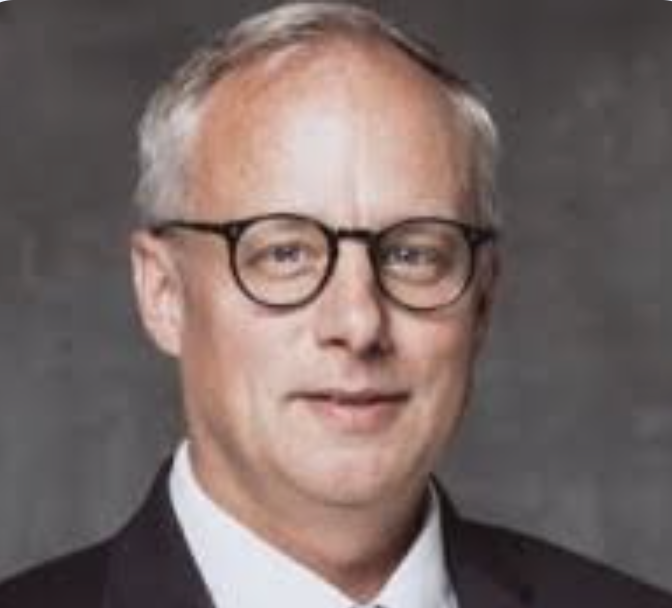
An Austrian citizen, Marcus Brand, Ph.D, is an expert on international affairs, democratic governance, and constitutional reform, with more than two decades of experience working across Europe, Asia, and the Pacific. He has held senior roles with international organisations including the United Nations Development Programme and the European Union. Most recently, he served as Chair of Fiji’s Truth and Reconciliation Commission.
Readers are welcome to post their comments using the box below; they can also send any feedback to Thoughtfox editorial desk via this contact form.