
Review: ‘Internet Shutdowns in Africa’ (2025) is globally relevant
by Piyush Mathur
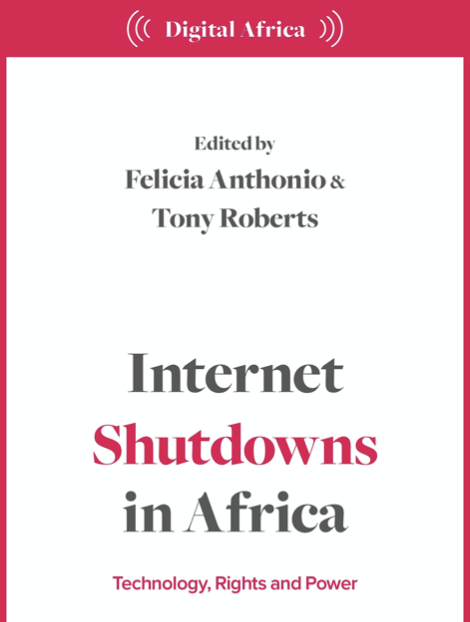
This is a screenshot of the cover of the book Internet Shutdowns in Africa: Technology, Rights, and Power (2025). (Image Credit: Zed Books/Bloomsbury)
Dedicated to ‘digital rights activists’ worldwide, Internet Shutdowns in Africa: Technology, Rights and Power (Zed/Bloomsbury, 2025), is a multi-author collection of research essays exploring the contexts, motives, and human-rights repercussions of government-enforced digital-network restrictions in eleven African nation-states. The nation-states considered in the volume are as follows: Zimbabwe, the Democratic Republic of Congo (DRC), Zambia, Ethiopia, Sudan, Nigeria, Chad, Senegal, Burkina Faso, Algeria, and Uganda. In their entries, the researchers took into account hitherto recorded episodes of such curbs within their country of focus, going deeper into those they considered particularly impactful. The volume does not contain any cross-country comparative studies, though its editorial introduction and conclusion do include comparative reflections—and there are occasional comparative comments made by the contributors themselves in their entries.
What is presented below is a detailed chapter-wise review-cum-summary that is not always kind but also never insincere. Before getting into that, it seems useful to mention that ‘Internet shutdown’ is a convenient and popular expression that may seem more absolutist than the range of phenomena it tends to describe. No matter its geographical, durational, demographic, or infrastructural range, an interruption intentionally imposed on a digital network or Internet-based system is called an ‘Internet shutdown’, i.e., it does not have to be a complete network blockage. There are several concurring iterations of the above, though most contributors to this volume have cited Access Now’s definition. As for the methods the authorities may have used to enforce an Internet shutdown, many contributors have used the Google incubator programme Jigsaw’s classification (2021) as their guide. In this review, all these diverse (enforced) digital incidents have been referred to interchangeably as ‘Internet shutdown’, ‘shutdown’, ‘network interruption’, or ‘network disruption’.
Comments on the editorial introduction to the volume
Co-authored by its editors, Tony Roberts and Felicia Anthonio, the volume’s first chapter, ‘An introduction to critical internet shutdowns research in Africa’ (1-26) notes the increasing frequency and sophistication of Internet shutdowns in Africa despite repeated calls made against them 'by the African Commission on Human and People’s Rights (ACHPR), the Economic Court of Justice of the Economic Community of West African States (ECOWAS) and the United Nations.' (1). While the editors stress the volume's focus on 'power' as its key feature and a novelty, the discussions about 'power' across the contributions are frequently rudimentary and ritualistic—and they may have in fact made the volume verbose.
The average human tends to have a pretty good grasp of who has power and who does not—what kind, and in what context. Repeated musings on a phenomenon that one has to contend with daily tend not to be rewarding to a reader unless newer theoretical grounds are broken by an author. As it happens, many contributors to the volume have borrowed conceptualisations of 'power' from prior theorists, and used them instrumentally—like a filter—to spot their apparent manifestations on the ground. All such conceptual applications in the contributions read like a classroom exercise: They do not critically engage with the given conceptualisations, and nor do they typically push them forward theoretically based upon the new ground research or personal reflection.
At any rate, the editorial introduction summarises all the collected contributions while highlighting some compelling facts that bear repeating. We learn, for example, that, in February 1996, Zambia had the first case in Africa of 'state-ordered digital repression', while Guinea imposed the continent's first nationwide shutdown in 2007. We also learn, among many other tellings facts, that 'fourteen African countries' had not had any 'recorded case of internet shutdowns as of the end of 2024', and that Ethiopia, Sudan, and Algeria were the top three countries in Africa in Internet shutdowns between 2018 and 2024 (4).
Although the essay mention that the research for this volume 'was produced by the African Digital Rights Network', it does not explain how its contributors relate to that network (and nor what 'produce' truly means here, given that the contributions themselves seem to showcase the individual researchers' own work). Moreover, while the editors claim that they 'do not believe that academics have a monopoly of knowledge about this subject' in defending their choice of activists, journalists, and other non-academic researchers for this volume, we encounter plenty of unproductive academic jargon in it. Larded with academese, even the editorial introduction itself vacillates between being a rugged undergraduate textbook and a sophisticated discussion of its case studies, their authors' research agendas, and their putative global significance.
Let the foregoing critical comments not detract us from what this volume does have to offer as we get into the details of each chapter, including the editorial conclusion to the volume. There is also a brief section containing the reviewer’s concluding comment at the end.
Zimbabwe
In Chapter 2, Nompilo Simanje reports on Zimbabwe’s longest-ever Internet shutdown (lasting 6 days, from January 18 to 24, 2019) when the country was facing protests. Ending only after an order of the High Court of Zimbabwe, this shutdown cost the country at least ‘USD 5.7 million per day’ directly and hid human rights violations otherwise recorded by the Zimbabwe Human Rights Forum (27).
Simanje renders Zimbabwe’s Internet shutdowns as just a new phase in the country’s long history of state-enforced censorship and media manipulation dating back to 1888. From that time on and up until 1979, the British colonial rule typically ensured that the Rhodesian press would reinforce Whites’ loyalty to its mission and support the British South African Company. Media outlets critical of government and/or pro-liberation emerged along the way, but they were shut down by the first Prime Minister, Ian Smith, who ruled from 1964 to 1979; meanwhile, state propaganda was disseminated through pro-government outlets. These executive curbs on free expression were sustained through legislative action, and this legacy lives on.
Post-1980 Zimbabwe
Simanje further notes that, starting out mid-April 1980, the post-Independence government continued to control the media to favour the ruling party. It also used the media to favour the so-called Shona people. The government also used disinformation to justify state violence against ‘Ndebele-speaking civilians in Matabeleland and Midlands provinces between 1983 and 1987’ (29).
While judicial orders ate into the government’s ‘monopoly over the airwaves’ during 1994-2000, a 1995 ruling permitted a private company ’a mobile telecommunications license’ (Ibid). Nevertheless, the state continued to control the media even after 2000. Using the Access to Information and Protection of Privacy Act (AIPPA) and the Public Order and Security Act (POSA), both enacted in 2002, the government began to close down newspapers that were critical of it—and journalists were arrested, bullied by its agents and proxies, Simanje observes.
2008-2016: Digitalisation gets the government’s attention in Zimbabwe
In the 2008 election, Zimbabweans used digital devices to criticise the government and monitor the vote; a contested result led ‘to the establishment of the Government of National Unity (GNU)’ (30). Hereafter, the government began to focus on curbing digital expression, even as digital media increasingly entrenched itself into the country over the period 2008-2016. In 2010, when the main opposition party began to interact with citizens through mobile-phone audio and text services, within three days the government threatened to withdraw the operators’ licenses unless they stopped catering to the opposition. In 2011, the government banned Blackberry, fearing its encryption. Ahead of the 2013 elections, Kubatana—a non-governmental organisation inactive since June 30, 2022—was debarred from bulk messaging via the international gateway system.
Post-2017 Zimbabwe sees some improvement
After Mugabe’s ouster and Emmerson Mnangagwa’s wresting of the presidency in November 2017, state repression continued with a day-long Internet shutdown on December 5 that year. Then, there was a six-day shutdown in January 2019 within the context of a public protest against a fuel-price increase. Later, however, Zimbabwe replaced AIPPA ‘with the Freedom of Information Act 2020, the Zimbabwe Media Commission Act, 2020 and the Cyber and Data Protection Act, 2021’—steps that Simanje considers an improvement while noting that other laws still need to be aligned with the Constitution (Ibid) .
Other improvements included the licensing of ‘six private television stations’ in 2020, followed by that of ‘eight community radio stations’ in 2021 (Ibid). Nevertheless, aside from the January 2019 incident, Zimbabwe (especially Harare) experienced Internet throttling on February 20, 2022—when the political party ‘Citizens Coalition for Change was hosting a political rally ahead of the by-elections’—and on August 22, 2023, ‘the eve of the elections’ (32). Simanje calls these state-enforced digital disruptions ‘merely the modern version of newspaper shutdowns, media blackouts, blocking of bulk SMS etc.’ (Ibid).
Giving several actual examples, Simanje notes that the Internet, despite its very limited spread in the country—had empowered Zimbabweans to come together to hold the authorities accountable. The state-enforced Internet disruptions and censor were reactions to the same, per her empirical survey and theoretical observations. As regards the 2019 shutdown, it was legally challenged by the Zimbabwe Lawyers for Human Rights (ZHLR) and the Media Institute of Southern Africa (MISA) (40).
In its media statements, the government defended its 2019 action arguing, variously, that such steps were necessary to maintain order, curb ‘false information’, and prevent conflict (40). However, Simanje, referencing findings put out by the United Nations Educational, Scientific and Cultural Organization (UNESCO), notes that these justifications, being too broad, are abused by political elites to control digital information to their own advantage.
Simanje’s empirical research into Zimbabwe’s 2019 Internet shutdown; methodological aspects
As part of her research, Simanje sustained an online survey for two weeks in May 2024, targeting the 2019 shutdown’s stakeholders ‘from the media, civil society, academia, and the private sector’ (36). Those surveyed opined, in a nutshell, that while the government justified its action as a way to keep the country safe, all it did was to prevent people from mobilising anti-government protests. The respondents also noted that the government’s own crackdown on the protests had made the residents physically unsafe, even as the shutdown had made them economically unsafe.
Simanje derives her interpretation of the ensuing legal outcome from a report published on a Zimbabwean law website, Veritas. According to her rendition of that report (which this reviewer has cross-checked for accuracy), the government argued in court that its Minister of State drew the power to impose the Internet interruption from Section 6 of the Interception of Communications Act. The court, however, rejected the government’s contention on the grounds that only the President had the ‘mandate to assign the administration of the Act to the Minister’, a key procedural step that had been missed, leaving the Minister to act alone (42). In other words, the court avoided a confrontation with the government by turning the case into a technicality, faulting the government on it and ordering it to lift the shutdown; but this also allowed the government to sustain its claim that it was constitutionally empowered to restrict the Internet.
In her literature review, Simanje notes concepts from other publications such as ‘digital authoritarianism’, five types of ‘expressions of power’, ‘strategic litigation’, ‘agency’, ‘resistance’—and how all these relate to technology and specifically to Internet shutdowns. It would have been better if she had discussed them in a section outlining her conceptual framework rather than one describing itself as ‘literature review’. There is no real review here anyway; what we have here is a briefly annotated list of sources from where she has borrowed these more or less commonsensical ideas she claims to have used as her analytical tools.
Simanje’s recommendations regarding Zimbabwe
As to how to confront this problem of state-enforced network interruptions in Zimbabwe, Simanje recommends continuing to pose legal challenges; training people to record the ‘human rights atrocities committed during’ these phases, and informing them about how technology and power correlate; advocting for limiting governmental control of the Internet; and integrating the United Nations principles of universal human rights into Zimbabwe’s private operators’ policies—which should include a requirement for them to be transparent about government’s directives regarding any curbs (43). She observes that people have already tended to find workarounds through mechanisms like Virtual Private Networks (VPNs), or seek relief through litigation.
Simanje concludes by observing that Zimbabwe has been carrying forward colonial and post-colonial regulatory control of information, with the government relying on legislation to restrict the residents’ Internet access in order to address 'the political interests of a few’ (Ibid). Inasmuch as Zimbabwe has signed on to relevant ‘regional and international standards’, its rulers’ curbs on the Internet have been illegitimate and unreasonable, and they have harmed the residents’ human rights (44).
The Democratic Republic of Congo
In Chapter 3 (49-77), Arsène Tungali explores the first-ever set of Internet shutdowns that took place in the Democratic Republic of Congo (DRC) during 2011-2019. That period overlaps with the rule of Joseph Kabila Kabange, the first ruler of the country’s digital era. (For the sake of distinguishing him from his father, this review will refer to him by his first name here on out.)
Tungali maps the scope of Joseph’s enforced network interruptions using Google's Jigsaw project's list of 'six modes of internet shutdown: throttling, IP blocking, mobile shutoffs, DNS interference, server name blocking and deep packet inspection' (62). He notes that Joseph’s ‘personal interests in retaining power' was the sole factor behind these coercions, which violated a wide range of civil rights and caused major financial losses to the network operators (73). Owing to their legal obligations, the telecom companies never resisted the government orders, though they had 'the responsibility to respect the human rights of their clients' in accordance with the United Nations' Guiding Principles on Human Rights (63).
The essay contains a report on people’s testimonies on the hardships they faced owing to these network interruptions—which included the 25-day long '2011 SMS blocking' , the 11-day long '2015 SMS and Internet shutdown', and the 'January 2018 Internet shutdown' (64-68). Tungali ties the reported hardships to the specific legal right(s) they had presumably violated, giving a concise legal framework to his analysis; he also describes how the people resisted and circumvented these shutdowns (68-71).
Altogether, Tugali discusses eight different shutdown events (falling between 2011 and 2019), describing their chronological marker, durations, what apparently caused them, the exact nature of the network interruption, and the government’s stated reasons behind its coercive action. Tugali’s are very succinct descriptions, and the key details are also presented in a table.
Jospeh’s government typically cited its concern for security as its reason behind its action. For its August 2017 throttling of image transmissions over the Internet, the government expressed its concern for presumed calls for violence by the opposition via misleading messaging; for the December 2018 and January 2019 events (clustered as one by Tugali) the motive cited was preventing fake election results from spreading around. All these network interruptions were the government’s reactions to political protests; at least three of them were spearheaded by the Catholic Church, with the Muslim community’s support in the December 2018-January 2019 election-related case. Of course, Joseph had to hand over power to Felix Tshisekedi after these elections.
A foray into Congolese history
Shining a light into this hitherto unexplored segment of recent Congolese history, Tungali reveals that the shutdown orders were always relayed through the telecoms minister to the Telecoms Regulator (ARPTC), ‘who will then speak to internet service providers' (63). Usually, the government itself published the orders; in some cases, there were unauthorised leaks. The essay also includes a broader historical introduction to the DRC’s political history, especially as it pertained to information and mass communication.
Tugali backtracks the DRC to its first name, Congo Free State, a private property of Leopold II of Belgium during the years 1885-1908 (though Tugali does not mention his name); thereafter, it became Belgium’s colonial possession, and was called Belgian Congo until gaining freedom in 1960 and adopting its current name (except that it was called Zaire between 1971 and 1997). The colonial rulers controlled the media space to serve Belgian interests by suppressing the majority Congolese voices, punishing anti-colonial ones, and promoting the imperial agenda.
Joseph Kabila Kabange’s rule saw the shutdowns discussed by Tugali
For 32 years after the DRC’s independence, President Mobutu Sese Soko retained similar controls on mass communication to keep himself in power within a single-party framework. After Mobutu was overthrown in a coup on May 16, 1997, the Kabila family—Laurent-Désiré Kabila followed by his son Joseph Kabila Kabange—ruled DRC for almost 22 years. The Kabila family largely retained the older communications controls, Tugali points out.
The DRC’s digital era took off in Joseph’s tenure. His successor, President Felix Tshisekedi—who came to power peacefully in 2019—has been Internet-friendly and not imposed any digital disruptions, Tugali notes. He also observes that there have been some challenges posted to the conventional media space during Joseph’s rule. The network disruptions discussed by Tugali came about entirely in Joseph’s rule.
Tugali’s recommendations regarding the DRC
Noting that the DRC currently has a democratic window that it could use 'to improve internet governance', Tungali also makes some very general recommendations (some of which are better viewed as wishes). One recommendation is that the government attempt to establish better relations with the private sector, safeguarding its usage of technology to promote people's economic interests (73). Other recommendations are as follows: The Parliament should legislate network shutdowns as unconstitutional; operators should revise their licenses to empower themselves to resist future shutdown directives and 'also consider filing transparency reports on all shutdown requests and joining their clients (end-users) in challenging shutdowns in court' (74).
Zambia
In Chapter 4, ‘Weaponization of the internet during Zambia’s 2021 election’ (79-99), Susan Mwape focusses on the August 12, 2021 shutdown in Zambia. She provides a substantial short-term story as its backdrop in addition to a long-term historical background. Regarding the latter, Mwape notes that under the British colonial rule—when Zambia was called Northern Rhodesia—the Northern Rhodesia Central Africa Broadcasting Station (CABS) ensured that broadcasting served colonial interests. After independence, during 1973-1990, the country was ruled by Kenneth Kaunda’s United National Independence Party (UNIP), under a single-party system. Kaunda ruled Zambia via a ‘ubiquitous’ surveillance system even as ‘the national broadcaster Zambia National Broadcasting Corporation (ZNBC), Daily Mail and Times of Zambia’ all promoted government propaganda (80).
From 1991 onward, Zambia has had a multiparty system; however, until recently it did not do much to develop a media-conducive environment. The political class waited until December 2023 to legislate Access to Information (ATI), which came into force in June 2024. Between 1991 and 2023, the governments have censored many media outlets, including online ones. Mwape cites Sally Burnheim’s (1999) claim that the first official instance of Internet censorship in Africa occurred in Zambia in 1996—when, in February, Zambia’s government succeeded in getting removed ‘a banned edition’ from The Post’s website ‘by threatening to prosecute the country’s main internet service provider (ISP), Zamnet’ (82). Even The Post’s editor, Fred Mmembe, was arrested, and the outlet was ‘later liquidated by the Zambia Revenue Authority (ZRA)’ (Ibid).
Among similar notable incidents, the websites for The Zambian Watchdog and Zambia Reports were blocked in 2013; the owners of the Watchdog were later able to make it re-accessible from Zambia, but the government ended up arresting three journalists accusing them of contributing to its continuing operations (except that they were all acquitted by the court system). While the government claimed that the Watchdog’s blockage was enforced because that outlet had been ‘inciting people to hatred’ (as Vice President Dr. Guy Scott put it), no explanation was given for the action against Zambia Reports, which failed to receive any response from the country’s ‘ICT Regulator regarding the blocking of its website’ (82).
Mwape’s report claims to hinge upon the ‘concepts’ of power, agency, digital authoritarianism, and citizen resistance; however, all but one of these are commonplace terms, and there is nothing original or deep said about them in the essay. One is left wondering whether there was even a need to discuss them formally, in a separate section. At any rate, Mwape wisely highlights the authoritarian elements in Zambia’s relevant laws—instead of simply faulting their enforcement. She also mentions the specific international articles and principles they appear to violate, including the Universal Declaration of Human Rights, Declaration of Principles on Freedom of Expression and Access to Information in Africa, and the International Covenant on Civil and Political Rights (ICCPR).
Zambia’s August 2021 shutdown synergised its citizens
Some text is missing in the essay right at the start of the section titled ‘Definition and types of internet shutdowns’ (90). But buried inside lots of mundane statements is the unexpected and specific observation that, unlike in other African countries, people in Zambia were conspicuously driven to defend their rights when ‘a potential shutdown’ was anticipated in 2021 (91). Mwape notes that the August 2021 shutdown was itself a reaction against a rising disaffection with the government and could be traced to people’s resistance against the ‘Constitutional Amendment Bill No. 10 of 2019’—which had unpleasant clauses, including one seeking ‘to remove parliamentary oversight over the Executive’ (92).
Aiming to discourage on-the-ground mobilisation against the bill, the government publicly cited ‘Covid-19 pandemic health measures’; however, lacking the requisite parliamentary support, the bill ultimately failed to pass in October 2020 (Ibid). Nevertheless, against the backdrop of a rising Internet, the government anyway persisted in its efforts to restrict online communication, with President Edgar Lungu and other government figures issuing threats against social-media abuse (91). In March 2021, without due consideration, Lungu passed into law ‘the Cyber Security and Cyber Crimes Act, The Data Protection Act of 2021 and the Electronic Communication and Transactions Act of 2021’ (92). This rapid line of action was generally perceived as the government’s alternative route to controlling the mass communication infrastructure, Mwape observes.
Notably, the pandemic-induced ban on physical rallies during the 2021 election campaign meant that the meetings could only be held online—except that the Internet worked well only when the ruling Patriotic Front’s supporters got together. The Covid-19 restrictions thus gave the ruling side an unfair advantage, Mwape observes.
Zambians emerge stronger
All these attempts at suppressing dissent were a build-up to the election-day shutdown, going by Mwape’s fairly engaging narrative here. By August 12, 2021—the election day—the government had completely turned off ‘popular social media platforms Facebook, Instagram, Twitter and WhatsApp’ without explaining why (93). But despite all these government measures presumably intended to discourage people’s participation in the political process, the election saw ‘a record 71 per cent voter turnout’ and extensive collaboration among citizens and media outfits (93). Among other examples of civil collaboration, she notes that August 2021 saw continual ‘virtual conversations on the ills of internet shutdown’, and Chapter One Foundation (COF)—representing several non-profit organisations—successfully sued the Zambia Information and Communications Technology Authority (ZICTA) to get all Internet services restored (Ibid).
The court’s judgment not only led to the services’ restoration but also forced the ZICTA to agree with COF to begin to observe the legal limits to its powers as the regulator and provide the ‘reasons for any shutdown within thirty-six hours’ in the future (94). Mwape suggests that the court’s ruling sent an unprecedented signal to Zambians that their authorities can be held legally accountable—and that the executive branch does not have limitless power.
Mwape’s recommendations for Zambia
Mwape concludes her essay by observing that Zambia’s 2021 Internet restrictions interfered with the basic rights of its citizens at a time when the ‘critical democratic process’ of national elections was unfolding. As to how to improve the Zambian Internet situation, she suggests that the government should align its ICT policy with ‘international human rights standards’ upheld by Internet-focussed institutions, and consult various stakeholders toward drafting policy that would allow it to maintain public order without Internet interruptions (96). She also recommends promoting digital literacy and cybersecurity awareness among the citizens, though she does not tell us who should do it. Finally, she recommends to ISPs to always publicly disclose who has ordered them to interfere with the Internet and in what ways—and challenge such orders legally.
Ethiopia
Chapter 5, ‘Shrouded in shadows: Human rights, armed conflicts and internet shutdowns in Ethiopia’ (101-120) by Yohannes Eneyew Ayalew and Lea Mehari Redae, marks out Ethiopia has having had the most shutdowns in Africa. The essay notes that after being introduced to Ethiopia in 1997, the Internet began to be censored quickly—but the situation aggravated after the incumbent Ethiopian People’s Revolutionary Democratic Front (EPRDF) faced unexpected losses in the 2005 elections. These elections’ results were delayed, prompting protests—which the government sought to curb partly by shutting down several modes of communication: even Short Message Service (SMS) was ‘suspended on 6 June 2005, and was not reinstated for approximately two years’ (107).
The authors highlight the contrast between Ethiopia’s official ambition enshrined in its Digital Strategy (2020-2025)— aimed at empowering the country digitally—and the government’s actual conduct, which has resorted to network disruptions all too often as a response to whatever appeared to stress it. The essay provides a nice colourful diagram categorising Ethiopia’s multiple network shutdown episodes falling between 2005 and 2024 (108). Among the several shutdown events they discuss, Ayalew and Redae focus on the three that unfolded in the following contexts: the insurgency and counter-insurgency in Wollega (2019 to present); the Tigray conflict (2021–2022); and the armed conflict in the Amhara Regional State (2023 to present).
Toward exploring how these three shutdown scenarios affected Ethiopians’ human rights and restricted the ‘political discourse in conflict situations’, Ayalew and Redae employed ‘a doctrinal legal research method, and a qualitative analysis’ as well as expert interviews (103). Their discussion of the concepts used for the study includes yet another walk for the reader through a number of definitions of ‘Internet shutdown’; these could have been summarised in one paragraph by removing the overlap among them and retaining the references. Having said that, the authors rather usefully highlight the ‘substantive, process and procedural dimensions’ of these shutdowns, which they have studied using a ‘human rights-based approach’ supplemented with what they call a ‘power approach’ (105, 106). They explain these dimensions, offering a granular, parametric pathway to assessing a shutdown situation; however, they don’t explain the difference between the two approaches clearly.
The author’s research permits them to acknowledge that long-active rebels posed a risk of abuse to Wollega’s communications systems; however, they deem the government’s response to it via network disruptions as both disproportionate and illegal. As for Tigray, the federal government imposed a 1,153-day shutdown amid its escalating conflict with the Tigray People’s Liberation Front (TPLF), which started on November 4, 2020. Ending on December 31, 2023, the shutdown took banking offline and severely disrupted humanitarian and medical aid, preventing even survivors of sexual violence from accessing help; it was the world’s longest shutdown when Ayalew and Rede wrote their piece. The authors also underline the Amhara shutdown’s significant negative economic impact, which accompanied its socio-political harm for the masses.
Overall, the authors’ judgement on all these enforced network disruptions is that they the Ethiopian government’s ‘tactic to control information flow, suppress dissent, conceal atrocity crimes and maintain authority during periods of unrest (114). Repeated severally in the chapter, the foregoing thought dovetails with their general conclusion derived from the so-called ‘power approach’: that ‘internet shutdowns primarily benefit those in power…by enabling control over information, suppressing dissent and maintaining political stability’ (115).
Ayalew and Redae’s recommendations for Ethiopia; a citational error
Ayalew and Redae’s ask the Ethiopian government to stop enforcing network disruptions in view of its rights-based obligations reflected in the Constitution as well as in the international agreements to which it is a signatory. They recommend giving telecom and Internet service providers greater autonomy while also asking them to observe their rights-related obligations to the people.
Yet another recommendation these authors have is rather unique as well as valuable; unfortunately, there is a citational error in it. The recommendation is that international organisations, especially those addressing health crises during armed conflicts, should articulate ‘guiding principles and normative frameworks addressing internet shutdowns’ based upon (what should have been cited as) Resolution 2 (34IC/24/R2), adopted at the 34th International Conference of the Red Cross and Red Crescent (22–25 October 2024). This resolution is titled ‘Protecting civilians and other protected persons and objects against the potential human cost of information and communications technologies (ICT) activities during armed conflict’.
Overall, Ayalew and Redae’s study is well-structured and richly detailed.
Sudan
Authored by Khattab Hamad—a Sudanese telecom engineer-turned-journalist—Chapter 6 (121-142) delves into Sudan’s digital censorship. Noting that Sudan ranks second in Africa in Internet shutdowns—with 21 incidents recorded between 2016 and 2024—Hamad focusses on the following three incidents for his core analysis: the 37-day shutdown of June 2019; the 25-day shutdown of October 2021; and 'the notable shutdown' of February 2024 (121). He cites these episodes’ long durations and significant negative effects on people’s lives as the reasons for his focus; before delving into this digital era however, he briefly sketches out Sudan’s history of censorship, tracing it to the Anglo-Egyptian colonial rule (1899-1956).
Hamad notes that Sudan’s Arabic newspapers during the Anglo-Egyptian rule were required to get intelligence clearance for each of their issues; moreover, the British authorities used to ensure—via hired Lebanese editors—that Egyptian influence were removed from the content. Colonial censor-cum-propaganda practices were retained by post-Independence rulers throughout the Nationalist Era (1956-2005): non-compliant outlets were shut down or seized—and even 'international mail letters' were censored (123). The government also controlled satellite dishes once they became available in 1996, and mandated permits for fax machines.
During 1989-2019, the rule of the National Congress Party (NCP) was all about ‘isolating citizens from foreign influence’ so that they would adhere to ‘its Islamist ideology’ (Ibid). However, with the public's growing disinterest in state propaganda passed off as news, Sudan's news industry would become unviable as a private enterprise. Under these circumstances, the country saw its first Internet transmission in 1996, but Hamad sets 2005 as the effective starting year for Sudan’s digital era.
In 2005, Sudan effectively entered the digital world—and Hamad sketches how that unfolded
Initially the World Wide Web allowed Sudan’s residents to use it as their publication channel, bypassing the pre-digital modes of censorship. However, Internet censorship soon began, with the first recorded case being that of a temporary YouTue ban imposed on July 22, 2008, followed by similar bans on it twice in 2010 and once in 2012. A full one-day Internet shutdown—the first in Sudan—was imposed on September 25, 2013, during an economic protest; then, within the course of a countrywide political uprising, a 68-day ban on Facebook, Twitter, Instagram, and WhatsApp was enforced between December 2018 and February 2019.
The foregoing impositions took place when Sudan had no formal provision for them. A formal digital regulation was implemented in 2020 by the Telecommunication and Postal Regulation Authority (TPRA) without any public discussion; this regulation included measures such as ‘partial Internet shutdown’ and control of Virtual Private Networks (VPNs) (124). In this context, Hamad mentions the different types of Internet shutdowns—including mobile data shutdowns and regional shutdowns—that the Sudanese authorities imposed between 2008 and 2024; he also presents a table depicting the key details.
Minor inconsistencies and some perfunctory treatment in Hamad’s account
There are some inconsistencies here, though. For example, the October 2021 ‘internet blackout’ of 25 days mentioned in the narrative is either missing from the table or it is shown there to have lasted for a different duration: whether the error is of the former or the latter type is impossible for a reader to guess given that the table does not mention the months in which these interruptions were imposed (125). Likewise, the narrative mentions ‘five documented shutdown events’ for 2022, but the table notes only four.
The essay’s conceptual framework hinges upon a binary of ‘power’ and ‘rights’, but it is not a deep theoretical proposal; nothing wrong with that, except that its presentation could have been shortened to a maximum of 4 paragraphs. In its current state, it is basically a set of two lists, with the latter list explicitly borrowing entirely from the United Nations corpus. Likewise, while Hamad’s literature review outlines prior research on relevant themes—say, disinformation, socio-economic impact, and human rights—it is largely a perfunctory discussion of particular publications of Alaa Daffalla, Global Partners Digital,Access Now, Lauren Ploch Blanchard, Johnstone Kpilaakaa, among others.
Hamad’s analysis of the Sudanese experience with enforced network interruptions
Hamad’s objective anyway is not to present a new theme, but to bring out the details of Sudan’s network shutdowns. For his core analysis of the three selected cases, he collected his primary data by interviewing seven individuals: three ISP engineers, one lawyer, one Human Rights advocate, and two Sudanese pro-democracy politicians. These interviews were conducted within the guiding framework jointly afforded by ‘Access Now’s definition of internet shutdowns’ and the UN standpoint ‘that internet access is a human right’; the politicians among the interviees were targeted specifically to get them ‘to define the power interests that motivated the shutdown decisions’ (131). Overall, the interviews sought to collect insights mainly on the concepts of ‘power’ and ‘rights’ as they played out in the selected Internet shutdowns. Hamad secured the interviewees’ consent in Arabic via Whatsapp.
Hamad’s analysis of his interview responses turns up nothing unexpected—but it does provide a nuanced context to each shutdown event while giving an insight into the general undercurrents of Sudanese politics. Noting that only the shutdowns meant to prevent cheating during the exams could be considered not to have been driven by politics, he discusses in separate segments how power, counterpower, and civil rights played out in real time during these shutdowns. Each segment here frames out inputs from those interviewees who could be considered specialists with a relevant status during the shutdowns: for instance, the ‘rights’ part in Hamad’s analysis brings out the inputs of a lawyer and a human-rights advocate.
The analysis shows that given the pressures on them, Sudan’s ISPs had toed the government’s line whenever they interrupted the network. In one shutdown instance that Hamad does not specify in the relevant statement, the access was restored on the orders of the General Court of Khartoum. A lawsuit had been filed against that shutdown jointly by the Sudanese Consumer Protection Organization (SCPO), the United Attorneys firm, and two individuals ‘on the basis of their subscription contracts with the telecom companies’ (133). (A quick check online suggests that Hamad means to refer here to the October 2021 shutdown.)
The essay’s concluding section is a smattering of main observations from the rest of the essay; it hardly adds anything to the piece. We do learn here that by the time Hamad wrote this essay, Sudan had seen 19 Internet shutdowns, which he claims his study is the first to record. Previously in the essay, he also highlighted the notable fact that Sudan saw its ‘first military-imposed shutdown’ in February 2024, when the rebellious Rapid Support Forces (RSF) assumed control of Khartoum’s Internet service providers’ data centres (127).
Nigeria
Chapter 7, ‘A rights-based approach to assessing internet shutdowns in Nigeria’ (143-164), by Thobekile Matimbe and Charles Kajoloweka, outlines the history of Nigeria’s mass communication scene across what it calls the colonial period (1850-1960), post-Independence era (1960-1992), and democratic and digital era (1999-2024). The sketch of the colonial period provided here is superficial and haphazard. Tucked into the bundle of vague descriptions here are the following two key claims regarding the colonial period: the newspapers, which were established by Europeans, generally served as a source of critique of the colonial rule—and the colonial government tended not to patronise those that favoured decolonisation. Citing Aro Olaide Ismail (2011), the authors note that the government’s pushback against the press began in due earnest via the Official Secrets Ordinance No. 2 of 1891, followed by the Newspaper Ordinance 1903—both of which ‘were introduced to control anti-colonial criticism’. These were followed by the Seditious Offences Ordinance of 1909 and the Criminal Code Act of 1916. Several publishers were arrested or fined based upon these laws.
No post-Independence regime is spared of Matimbe and Kajoloweka’s charge regarding its unwarranted, illegal curbs on the media; however, the military regimes (of which Nigeria saw 8 between 1966 and 1999) are particularly cited for their control and violent suppression of the media. The authors give numerous concrete examples of victimised individuals and media outlets, describing the manner and mode of their persecution by particular military regimes.
Inasmuch as the electronic mail services began in 1991 in Nigeria (with the Regional Information Network of Africa (RINAF) introducing full Internet access in 1995), its democratic phase—which started out in 1999—was broadly the first political phase that saw digital media. Olusegun Obasanjo, who governed Nigeria both as a military ruler and as a democratically elected president, is cited by the authors as having been equally suppressive of expression in both roles. Nigeria took a key step toward media freedom with the passage of the Freedom of Information (FOI) bill under the administration of Goodluck Jonathan, the authors point out.
Wartime tactics in peacetime in Nigeria; explanatory gaps, contradictions, circularity in the essay
A revealing observation made in the essay is that Nigerian governments have largely deployed wartime tactics of ‘humanitarian blockades’ to respond to domestic conflicts and civilian strife—with the curbs on expression, including on electronic media, being just a part of that tactics (148). Out of the three major shutdowns Matimbe and Kajoloweka focus on, two had targeted mobile and telecommunications network during the periods of May-July 2013 and September 3-19, 2021. The first one, ordered by the Nigerian Army, affected the states of Adamawa, Borno, and Yobe; the second one, ordered by the Nigerian Communications Commission, affected Zamfara State. A third shutdown discussed in the essay was a ban that President Buhari—claiming to be concerned about protecting Nigeria’s sovereignty—imposed on Twitter for the period of June 4, 2021-January 13, 2022.
The essay seems to imply that the Twitter ban was a reaction to that platform’s facilitation of #EndSars protests in October 2020; however, there is a gap of over 200 days between October 2020 and June 2021, and there is no explanation as to how those protests specifically could be cited as a key factor behind Buhari’s decision to ban Twitter (149). Further down, Matimbe and Kajoloweka mention that Bihari imposed this ban right after deleting a Tweet he had made and for which he had received severe backlash—but, again, no explanation is supplied to connect that Tweet’s deletion to the ban (150). Later in the essay, we are told that ‘the Applicants’ had accused Buhari of retaliating against the flagging of his Tweet—but we are not told what the authors mean by 'the Applicants’; we just have to guess (154). Then, on pages 155-156, the authors claim that Buhari had banned Twitter to retaliate against that platform’s deletion of his controversial Tweet—but this claim would seem to indicate that the ban had nothing to do with #EndSars protests of 2020, and nor had Buhari himself deleted the Tweet following the backlash (as the essay had claimed on p. 150).
In reality, as far as the Buhari government was concerned, Twitter’s deletion of Buhari’s Tweet was the last straw on the camel’s back: In its follow-up explanation, the government had cited an accretion of factors as the reasons behind its decision to ban Twitter. It should not have been so difficult to provide a clean summary account of the above—including a critique of the ban and the government’s explanation thereof—as it apparently has been for the essay’s authors. (Their one-paragraph description of the September 2021 ‘Zamfara State shutdown of mobile networks’ in September 2021 is also far from lucid; it has been inexplicably used in the essay to illustrate some inane concepts of ‘power’ rather than to illumine the overall context of its extended imposition.) At any rate, several lawsuits against the Nigerian government were filed ‘before the Economic Community of West African States (ECOWAS) Court, which consolidated them into one and ruled that Nigeria had violated its citizens’ ‘rights to freedom of expression, access to information and the media by suspending Twitter on 4 June 2021’ (149).
Aside from informational gaps, the essay also has significant explanatory gaps. For instance, the essay’s literature review section strings together mentions of core findings from prior publications without weaving them into an argument or exposition. Meanwhile, the authors’ discussion of ‘human rights’ and ‘power’ is unnecessarily long, given that they don’t critically engage with these phenomena nor add anything to them: They just reproduce some broad conceptual strokes from selected institutional documents and academic luminaries and then claim to apply them in their analysis.
Just to give one example, consider their observation that the Twitter-ban ‘retaliation demonstrates the concept that those with authority are regarded as relatively powerful as in the case of President Buhari, whilst the citizens, in the shadow of political power, are relatively powerless’ (154). Unfortunately, not only does that statement contain circular reasoning, but it also reduces to a banal truism: a typical citizen is always going to be ‘relatively powerless’ in comparison with the head of his or her state. The authors’ job anyway would not have been to demonstrate a concept that they had already chosen to apply to illustrate something on the ground: This approach simply produces circular, self-affirming narratives.
Overlooking geo-economic power imbalance in reference to the Buhari-Twitter friction
Moving on, Matimbe and Kajoloweka do meaningfully note that Buhari’s Twitter ban was vastly disproportionate as a reaction to Twitter’s deletion of his post, but they overlook the geoeconomic power imbalances between Western global corporations, like Twitter, and developing countries, like Nigeria. Twitter, an influential American platform, had been operating in Nigeria’s cyberspace without being a legal entity there—and it had thus remained outside any local tax obligations. Although Buhari did not impose the ban on Twitter because of its hitherto extrajudicial status in Nigeria, he ended up requiring it to legally register in Nigeria and comply with its taxation for resuming its operations. The government’s line of action was certainly cynical—but whether it was entirely unreasonable, which is what Matimbe and Kajoloweka seem to believe, is hard to digest.
The authors deem Buhari’s imposition of these conditions on Twitter to be a ‘stringent action by the state to retain power over social media platforms’ without considering issues in sovereignty and post-colonial power imbalances (157). In this context, the authors’ contention that Twitter’s removal of Buhari’s ‘Tweet from the public domain was only affecting him solely’ is also rather simplistic—because Buhari made that Tweet as the elected head of Nigeria’s representative government; deleting his Tweet, especially given that it was a threat to seperatists, was bound to affect the entire citizenry, one way or another (156). Matimbe and Kajoloweka, however, are right to highlight the government’s ‘lack of transparency’, ‘abuse of executive authority’, and negative economic consequences of Buhari’s Twitter ban (156, 157).
Matimbe and Kajoloweka’s concluding observations on Nigeria
The essay includes some selected bits from the responses Matimbe and Kajoloweka collected from elevent victims of the interruptions caused by Buhari’s Twitter ban as well as ‘mobile network shutdowns in various states’; predictably, the respondents were not happy with how their ‘access to information’, ‘freedom of expression’, and livelihoods were disturbed by these incidents (157). The rest of the essay, all the way to its ‘Conclusion’, is a very muddled write-up whose key points beyond the repetitive hodgepodge of specifics are as follows: Governmental and corporate entities should follow a rights-based approach to the Internet and ensure transparency; Twitter is citizen-empowering; any interruption in citizens’ Internet access infringes upon their rights; and that ‘judicial oversight’ should always be present whenever Internet interruption is sought by an authority (160).
While Matimbe and Kajoloweka are overall scathing in their criticism of Nigeria’s history of curbs on expression, they are careful to note that it ‘has no history of blatant nationwide internet shutdowns cutting across all social media platforms’ (149).
Chad
In Chapter 8 (165-180), Qemal Affagnon has put out a lot of hackneyed statements on the negative effects of network interruptions on people’s lives, and how those in power use them to control ordinary people. But he has also included a table showing the different ways and for what durations Chad’s authorities interfered with the communicational network between 2016 and 2024—and these details are rather shocking. Between 2018 and 2019, for example, Chad blocked access to social media platforms for 472 days; in 2016, the Internet had been kept inaccessible for 235 days; and that is aside from several other periods of different types of enforced network interruptions (166).
Affagnon notes that Chad’s Internet shutdowns are mere updates on its history of repression (and various bursts of protests against the same). Citing CIPESA’s 2019 report, he points out that these network interruptions began to be enforced in 2014. Authorities have typically cited maintaining general security as the reason behind their shutdown measures; other cited reasons have included curbing the spread of fake news or hate speech. While several specific details are mentioned in the essay regarding all of the above, they have not been threaded through properly. But that does not mean that the essay does not have some original observations to offer.
Déby, oil, security, France and mapping tools, and international anti-terrorism cooperation
Affagnon places Chad’s repressive proclivities within the context of its extreme domestic conflicts following its independence from France in 1960, and the so-called Déby dynasty’s continuing rule since 1991. The term ‘Déby dynasty’ refers to the rule of Idriss Déby and his son, Gen. Mahamat Idriss Déby Itno. A key aspect of this dynastic rule highlighted by Affagnon is its use of oil revenue to strengthen Chad’s security apparatus—which, in turn, has been used to support international forces (especially French and the United Nations’) to fight Islamic armed groups in the Sahel region, especially Mali.
But this security apparatus is also used for domestic repression—and Chad has never had a fair election anyway. An odd factor that Affagnon mentions here is the provision of ‘mapping tools’ to Chadian authorities by France’s National Institute for Geographic and Forestry Information (Institut national de l'information géographique et forestière), which they used to better target ‘opposition’s strongholds in the capital N’Djamena’ (174).
Was it editorial superimposition or oversight or both?
That this book’s chapters’ structure may have been some bit of an imposition from its editors is reflected in the fact that this chapter’s section titled ‘Recommendations’ contains no recommendations whatsoever! Instead, it contains just a recount of events that took place between the death of Idriss Déby on April 20, 2021 and October 2022, when his son, Gen. Mahamat Idriss Déby Itno, unleashed his brutal repression of protests. It seems that a structure and associated section subtitles were editorially imposed upon all the essay for this volume, but the author of this entry went his own way without removing the imposed subtitle. Suppose that’s not the case, then where is the editorial oversight in this regard?
Finally, in the essay’s loose sally of words comprising the ‘Conclusion’, the only meaningful observations are that Chad’s control of the domestic network remains largely unaccountable, and its enforced network interruptions run rampant even as it is otherwise trying to expand Internet penetration across its territory. It would have surely helped if the editors had intervened and requested from the author a tightening of ‘Conclusion’.
Overall, the essay is inconsistent in its focus and lacks direction.
Senegal
In Chapter 9, ‘Internet shutdowns in Senegal: How power interests prevail over citizen rights’, Ababacar Diop (181-195) focusses on Senegal’s Internet shutdown imposed in response to the unrest caused by the opposition leader Ousmane Sonko’s arrest before the 2024 presidential election. This election had already been postponed by almost a month, following a 3-year struggle between the ruling establishment (which had originally tried to postpone it indefinitely) and the opposition.
Diop initially notes that this 2024 Internet shutdown was the first that the country had faced after ‘two decades of uninterrupted internet’, only to contradict himself four pages later by claiming that Senegal’s outages started ‘only from 2021’ (181, 185). Meanwhile, he also notes that in 2021-2023 the Internet was disrupted as the government’s response to the protests related to Ousmane Sonko’s ‘arrest’ (though this reviewer feels the need to clarify that it was not just a single legal arrest) (183). In the rest of the chapter, Diop anyway references government-enforced Internet disruptions since 2021.
As far as the 2024 network interruption is concerned, Diop points out that the relevant ministry notified the public of its enforcement via a press release, citing the need to curb hateful messaging and keep public order. He notes that after this shutdown, Senegal has had several such incidents related to the Internet and even the telemedia—and they have typically been used by the government to prevent the coverage of specific protests.
Repression continued long after French colonial rulers had left, but a liberal phase ensued—until it began to fray
Going back in time, Diop argues that following the French colonial authorities’ establishment of the first newspaper in 1856 in the Colony of Senegal and Dependencies, the media space has been controlled by those in power. After Senegal gained independence in1960—and all the way until 1981—the post-colonial governments have also controlled domestic mass communication.
In 1981, however, President Abdou Diouf began to open up the mass communication sector to private owners and divergent viewpoints; the sector was further liberalised during Abdoulaye Wade’s rule (2000-2012), which saw no network ‘shutdowns or arrests for opinions’ (182). In 2012, when Macky Sall’s goverment assumed power, Senegal strengthened its commitment to expanding the media sector via digitalisation as part of its Emerging Senegal Plan (PSE); however, Sall’s rule (2012-2024) also saw Senegal’s first Internet shutdown as well as the earliest arrests for expressing one’s opinion on social media (183).
Diop points out that Senegal, which anyway ranks very low in Africa in Internet access, has tended to enforce Internet interruptions on the pretext of fighting disinformation and maintaining security—and the majority of these events have occurred between 2020 and 2024. He also mentions that Senegal had ‘thirteen days of mobile internet cuts’ between June 2, 2023 and February 13, 2024 (190). The essay includes a tabulated description—adapted from TV5Monde—of 5 network interruptions that the country was put through between March 5, 2021 and February 13, 2024; for one of them, the government neither notified the public nor gave a reason.
The network shutdowns’ impact on Senegal’s residents’ rights; pathways to resistance
Diop briefly discusses how these interruptions undercut the economic rights of Senegal’s residents and halted their access to emergency health care. Nothing new there; however, his discussion of the digital and human rights is more concisely grounded in relevant documents, and better theorised, than many other essays in this volume. His key observation regarding these shutdowns is that they have been used to protect the ruling élites, and that the governments have incorrectly assumed that such interruptions ‘can end social unrest, curb the spread of misinformation, hate speech, or reduce cybersecurity threats’ (188). In terms of resistance to these enforcements, Dior highlights Virtual Private Networks (VPNs) as a key tool that people used to continue their online activities during such phases; civil society organisations also issued joint statements condemning the authorities for these interruptions.
In a rather muddled paragraph, Diop means to mention two distinctive legal steps taken by two separate entities to challenge Senegal’s network interruptions of 2023: (1) an application jointly filed on January 31, 2024 by Africtvistes and the Senegalese journalists Moussa Ngom and Ayoba Faye (with the support of Media Defence and Stanford Law School’s Rule of Law Impact Lab) in the ECOWAS Court of Justice; and (2) a lawsuit (ECW/CCJ/APP/37/23) filed on September 15, 2023 jointly by Association des Utilisateurs des Technologies de l’Information et de la Communication (ASUTIC) and its president Ndiaga Gueye in the same court. (When Diop wrote the essay, the case was still pending in the court; the verdict came on May 14, 2025, and it overwhelmingly favoured the plaintiffs.)
Toward improving Senegal’s connectivity situation, Diop makes some general but concise recommendations to Senegal’s government, civil society actors, telecommunication operators and other members of the private sector. A basic recommendation made here is that the government adopt the Bill on Access to Information. (As some readers will be aware, Senegal did pass that bill into the Law on Access to Information—Law No. 14/2025—in August 2025.)
Burkina Faso
In Chapter 10, Harold Adjaho (197-219) brings out details regarding Burkina Faso’s government-imposed network interruptions in November 2021 and January 2022. The 2021 incident was the country’s first of its kind, whereby mobile Internet was blocked from November 20 to November 28. A second 16-hour mobile Internet shutdown was imposed on January 10, 2022—hours before the arrest of eight soldiers accused of destabilising state institutions; retrictions were also imposed on Facebook Messenger for 12 days, and on Whatsapp for a few days. A third mobile data shutdown lasting 35 hours was enforced on January 23-24, 2022.
Adjaho collected empirical data for his study using semi-structured interviews with Burkina Faso-based members of the Internet Society and, additionally, via an online questionnaire. Of the eight people who responded online, he selected four participants from diverse professional backgrounds for deeper analysis. Responses showed that the shutdowns prevented access to information, communication, and online services—causing financial losses, reduced business activity, layoffs, and difficulties for journalists accessing reliable sources, especially in regions with weak infrastructure. The shutdowns undermined economic rights, digital rights, freedom of expression, and democratic governance, even as the government sustained them under a legal framework established by Law No. 061-2008/AN and ISP licensing agreements that compel Internet providers to follow state directives in the name of national security.
A chequered history—and a bit of imprecision
Toward exploring the whys and wherefores of these enforced network disruptions and their implications for democracy and residents’ rights, Adjaho first outlines Burkina Faso’s ‘political history of media controls’, classifying it into eight periods: the colonial era (1898-1960), post-independence period (1960-74), military rule and state control (1974-83), revolutionary period (1983-7), Blaise Compaoré era (1987–2014), Transition Period (2014-15), Roch Marc Christian Kaboré’s presidency (2015 to 2022), and digital era (2005-24). This history section is followed by a literature review, and a presentation of ‘the concepts of power, rights and technology’; thereafter, we find his reports on testimonies from eight shutdown victims, and analyses of relevant documents as well as social media posts.
Before moving any further, Thoughtfox readers may benefit from knowing that what has been called Burkina Faso since 1984 was the fully independent Republic of Upper Volta from 1960 to 1984; it had been established in 1958 as the autonomous Republic of Upper Volta within the so-called French Community—and even prior to that the territory was part of French West Africa (AOF). The republics in this history were the autonomous Republic of Upper Volta (1958–1960); the First (1960–1966), Second (1970–1974), and Third (1978–1980) Republics of Upper Volta; and the Fourth Republic of Burkina Faso (1991–2014). With the above outline of this chequered history, we are better positioned to appreciate Adjaho’s observation that the French colonial authorities established newspapers in their West African territories to cater to their own interests and to promote governmental propaganda.
While that general standpoint is correct, Adjaho seems a bit imprecise in tracing the legal backgound behind it. On page 198, he states the following: ‘The 1881 French law on press freedom restricted media ownership and content, requiring publications to be managed by French nationals (French law of July 29, Article 69, 1881).’ But in reality, the Loi du 29 juillet 1881 sur la liberté de la presse, implied in his reference, was a liberal press law that abolished prior censorship, established freedom of publication, and defined press offences such as defamation and incitement: It did not impose a general nationality requirement for newspaper ownership or for the press as a whole. Although the law contained qualifications for the legally responsible managing editor (gérant responsable) that historically could include French nationality requirements, Article 69 did not establish a general rule that newspapers had to be owned or managed by French nationals.
The additional restrictions that operated in the French colonies derived from separate colonial legislation rather than from the metropolitan press law itself. In Upper Volta (then part of French West Africa, AOF), press restrictions stemmed principally from AOF-specific decrees, particularly the Decree of 4 August 1921 (which Adjaho does mention separately). Earlier and subsequent colonial measures—including wartime regulations adopted from 1914 onward, the Decree of 27 March 1928, and later amendments during the 1930s—reinforced administrative supervision of the press and expanded powers of prior authorisation, seizure, and summary suspension.
Post-Independence media curbs in Burkina Faso
Adjaho notes that while the post-Independence period saw greater media freedoms in the Republic in comparison with the colonial times, state-owned outlets still dominated the field. Maurice Yaméogo, the first president, passed laws in 1959 and 1960 respectively empowering the government to seize outlets viewed to be security threats, and restrict or ban others viewed to disturb peace. Only government-employed journalists were allowed to work, and the outlets simply disseminated the government’s inputs to the public.
In January 1966, General Sangoulé Lamizana wrested power from Yaméogo ‘but maintained similar media control policies’ (199). It was only after the establishment of the Second Republic on June 14, 1970, that non-governmental outlets began to operate; however, that ended with the end of the Second Republic in 1974. Between 1974 and 1980, via Ordinance No. 63-68/PRES, the government enforced pre-censorship, retaining its own Radiodiffusion-Télévision (RTB) due Burkina as the only broadcast outlet. However, after Saye Zerbo-led military coup in 1980, the print media saw some relaxation; and then, after 1982—when Jean-Baptiste Ouédraogo took charge of the country (still called Upper Volta) via another military coup overthrowing Saye Zerbo—the media ecosystem generally was also relaxed a bit.
But, then, on August 4, 1983, Ouédraogo was overthrown by Thomas Sankara as part of coup called ‘the Revolution’—and the new regime ‘nationalized several media outlets’ to use them for its propaganda while controlling their private counterparts anyway (200). With Sankara’s assassination in 1987, Blaise Compaoré’s would begin his rule that would end in 2014. Adjaho notes that Compaoré initially tried to control the media space very strictly but buckled under the ‘international pressure for democratic reforms in the early 1990s’, permitting a multiparty system (Ibid). However, the repression continued, marked by the assassination in 1998 of Norbert Zongo, the editor of L'Indépendant—an incident that prompted protests leading to ‘Compaoré’s resignation in October 2014’ (201).
Post-2015 liberalisation in Burkina Faso
Thereafter, until December 2015, Burkina Faso was under the command of Michel Kafando, a former diplomat, who prepared it for a November 2015 election with the support of civil society organizations. This period saw greater freedoms for the country’s residents and journalists, some of whom were also trained by foreign organisations. This liberalisation continued after Roch Marc Christian Kaboré’s election as president in December 2015, with the journalistic sector benefiting from the founding of a ‘Media Support Fund’ in 2017 (Ibid).
Meanwhile, social media had already played a critical role in promoting this liberalisation. Adjaho cites the 2011 Burkinabé Spring, the 2013 Balai Citoyen movement, and the October 2014 uprising that ousted Compaoré through coordinated online mobilization and hashtags such as #BurkinaFaso and #Lwili. In fact, #Lwili (‘bird’ in Mooré, connoting freedom) became a major citizen-led justice movement, especially during and after the 2014 uprising. Nevertheless, many media outlets in Burkina Faso remained financially fragile. After 2015, online dissenters faced intimidation, surveillance, and restrictions under cybersecurity laws such as Law No. 059-2015/CNT. While online activities continued to mobilize people during later political crises—including the 2020 elections and the protests in 2021–2022—the government tended to disrupt those activities.
Kaboré's second term (2020-2022), and Adjaho’s core analysis
In Kaboré's second term (2020-2022), marked by increased terrorist attacks, the government frequently exercised censor, and the network interruptions discussed by Adjaho were enforced during this time. Adjaho tabulates these interruptions’ key details, including their estimated costs to the public and the number of people they had affected (as per the figures offered by the Regulatory Authority for Electronic Communications and Postal Services). Although he mentions the ECOWAS sanctions against neighbouring Mali in this context, he does not explain their relevance to these incidents; more understandable to the reader is his suggestion that the January 2022 incident was related to Lieutenant Colonel Paul-Henri Sandaogo Damiba's successful attempt at taking control of the country.
In his analysis, Adjaho notes that the government, while remaining largely evasive on the whys and wherefores, defended these enforced network interruptions claiming that they were necessary to maintain public order, limit misinformation, and prevent unrest linked to terrorist insecurity and anti-government protests. He cites the example of Maxime Koné, Minister of Security, who refused to comment on the January 2022 shutdown. Critics, however, argued that the interruptions were political instruments meant to control public narratives, restrict activists and journalists, and weaken organising against the government’s handling of security crises. Opposition leaders (such as Eddie Komboïgo), civil society groups (such as the Burkina Faso chapter of the Internet Society and Balai Citoyen), as well as the National Human Rights Commission condemned the shutdowns as illegal violations of various rights.
These shutdowns were resisted online: domestically through VPN use (though ineffectively during total outages) and hashtags like #lwili; and internationally through 'movements like #KeepItOn', with the support of organisations such as Access Now. The hashtag #lwili was used for civic resistance and to reframe the shutdowns as violations of digital rights rather than measures of national security.
Adjaho’s recommendations regarding Burkina Faso
Adjaho has muddied his essay with repetition, declarative overlap, and hackneyed academic jargon. As to the way out and forward for Burkina Faso, he recommends that the country strengthen its technological resilience by investing in robust and alternative digital infrastructures and promoting awareness about digital tools alllowing people to stay connected during disruptions. He also stresses that the country needs clear legal and institutional frameworks to align its network maintenance with international standards of legality, necessity, and proportionality, while empowering citizens to understand and defend their digital rights. In a rather buzzwordy streak, he also suggests that greater transparency, stakeholder participation, and regional coordination with ECOWAS and neighbouring states can help the country govern its network democratically—balancing national security with economic needs, inclusion, resilience, and fundamental rights.
Algeria
In Chapter 11, ‘Algeria’s internet shutdowns and school exams’ (221-248), Kassem Mnejja explores Algeria’s week-long annual Internet interruptions that began to be enforced by the government in 2016 ‘to prevent cheating during national examinations’ (221). He locates this practice in Algeria’s long history of restricting communication, classifying that past into the following four phases: French colonization (1830–1962); independence (1962–91); civil war (1991–2002); and the digital era (2002–present).
Per Mnejja’s account, the French imperialists set up French media outlets in Algeria to promote their propaganda and keep out native voices. In the post-Independence period, the National Liberation Front’s (FLN) one-party rule nationalised and expanded the inherited colonial media, adding national channels in Arabic and Tamazight while retaining the government’s control over it. The FLN’s control of the media was fully officialised via the 1982 Information Law (Loi n° 82-06 du 6 février 1982 relative à l'information) (222).
Mnejja’s core analysis of Algeria’s exam-related enforced digital interruptions; Algeria’s self-contradictory digital posture
During the Algerian Civil War (1991-2002), the government further suppressed critical voices, with many journalists tortured and killed; independent voices were also attacked by Islamist forces opposing the government (though Mnejja does not identify or characterise the anti-government forces at all). Since the civil war’s end and all the way to the present, Algeria’s media—especially of the audiovisual variety—has remained largely under state control, despite ‘the restructuring of the Algerian Radio and Television Establishment (RTA) in 1986 and the introduction of private broadcasting following the Arab Spring’ (223).
The government has remained suppressive online, just the same, even though Algeria’s digital infrastructure has expanded significantly during the past twenty-some years. So, despite achieving an Internet ‘penetration rate of 72.9%’ by 2024—indicating the country’s rising reliance on digital connectivity—the government has continued to interfere with the infrastructure, whereby generating a self-contradictory policy turf overall (225). Mnejja briefly references the Hirak Movement (2019–2021) as a factor in both popularisig the Internet and inviting interruptions to it from the ruling quarters. (He did not feel the need to explain that the Hirak Movement was a long, peaceful protest against Abdelaziz Bouteflika’s announcement of a 5th presidential term—and it succeeded in getting him to resign after the military’s pressure.)
Presenting data on the exam-related digital curbs, the essay presents and discusses details related to each interruptive incident that marked the period between 2016 and 2024. Mnejja explains these digital curbs in reference to their precise correspondence with ‘four key rights guaranteed to citizens in the Universal Declaration of Human Rights (UDHR 1948), the International Covenant on Civil and Political Rights (ICCPR 1976), and the International Covenant on Economic, Social and Cultural Rights (ICESCR 1976)’ (229). Via an excellent literature review, he follows up his theoretical observations with a concise analysis of ‘interviews…conducted with seven individuals who either took their baccalaureate exams or worked in key sectors of Algeria’s digital economy between 2016 and 2023’ (233).
The predominant sentiment of the responses he received was that the government imposed those Internet curbs simply ‘to prevent cheating and uphold exam integrity’ (234). While the respondents largely overlooked the interruptions’ impact on the general population, concerns were raised regarding ‘protecting broader societal and individual rights’—and even some specific alternatives were also suggested (Ibid).
Mnejja’s verdict, and Algeria’s alternatives
Amid quite explanatory repetitions running across a few pages, Mnejja concludes that Algeria’s enforced interruptions, being overly broad, have failed ‘the proportionality requirements outlined under international law’ (Ibid). While causing economic disruptions and rights infringement, these measures also could not ‘prevent cheating or eliminate exam leaks’; moreover, élite establishments were able to bypass them via recourse to premium Internet services options, thus highlighting ‘systemic inequities’ (235, 236, respectively).
Among possible alternatives to Algeria’s existing approach to managing academic examinations via Internet shutdowns, there are references in the Mnejja’s collected survey responses to ‘signal jammers near schools’, on-site printing of hitherto digitally encrypted examination papers, and greater security at the exam centres (239). Mnejja also nicely encapsulates key steps taken by people and non-government organisations in Jordan, Iraq, and Sudan against their own ‘exam-related shutdowns’, noting the lack of similar efforts in Algeria (240). He himself advocates adopting a historically informed, multi-stakeholder approach to minimising these incidents and their adverse consequences and to identifying alternatives that safeguard the integrity of Algeria’s examination system through multi-sectoral collaboration.
Mnejja also stresses that the state-owned Algérie Télécom—the biggest player in the market—cannot be blamed as it had been simply obeying the government’s orders to restrict the services. He recommends, instead, opening the market further so that Algerians would have more alternatives during interruptions to the services provided by this state provider. (Although he uses the term ‘monopoly’, on page 227, to characterise the government’s status within the country’s telecommunications market, it would have been more accurate to call it near monopoly, instead.). Sadly—like several other contributors to this collection—he also could not resist, in his concluding section, a ritualistic deployment of ‘power over’, ‘power within’, ‘‘power with’, and power to’ as if they were some rarified concepts!
Uganda
In Chapter 12, Juliet Nanfuka focusses on the role of Internet shutdowns during Uganda’s 2021 elections, rendering the situation as a trilateral struggle among the platforms, the state, and the citizens. Noting that Uganda had first shut down its social media before turning off all of the Internet for five days in February 2021, she reconstructs the associated power dynamics via document analysis and an online survey filled out by 15 individuals who had experienced these interruptions.
Characterising the Ugandan state as a mix of democracy and authoritarianism, Nanfuka also puts these shutdowns within the context of the country’s history of election-related digital censorship dating back to 2006—and even further back into pre-digital censorship during British colonialism (which took off in the region in 1894). However, she acknowledges that censorship in the region antedated the British rule.
The British colonial use of inter-religious strife in ‘Uganda’, and the post-independence situation until 2010
Nanfuka notes that the British used religion as ‘one of the tools…to extend colonial power’, and that ‘vicious religious wars involving Anglicans, Catholics and Muslims’ were the birthing beds for the colonial control as well as the early print media, which was predisposed to reinforce colonial control (251). The religious wars provided the pretext to the British to declare Uganda their protectorate, she argues. However, while she writes that ‘Uganda was declared a British protectorate in 1894 by Sir Gerald Portal’, the fact is that Sir Portal had been dead for months when the declaration was made (albeit upon his recommendation) by Archibald Philip Primrose, 5th earl of Rosebery(Ibid).
At any rate, between 1900 and 1911, several Christian missionary-led publications came up in the region; these promoted religious thinking and ‘loyalty to the British Empire’; however, in 1920, some Nairobi-based Ugandans began to publish Sekanyolya, which had an independent, native-led approach to the news. Sekanyolya was soon followed by others that challenged ‘the protectorate…class, religion, and the use of kingdoms for social influence’ (252-253).
The colonial rulers responded to these developments via Surety Ordinance No. 9—which, in 1910, mandated that such outlets be registered with the government—followed by the Press Censorship Ordinance No. 4 of 1915, which gave the governor absolute powers of censorship. However, critiques of the colonial rule, including via newer native outlets, continued, prompting the authorities to restrict or ban them, and to persecute, imprison, and/or fine responsible individuals. These incidents stirred unrest, including riots. Nanfuka provides a concise account of these developments, illustrated with prominent examples.
To exert greater control over expression as well as to check disloyalty to the British rule, colonial authorities brought in the Press Censorship and Publications Act of 1949 followed by the Penal Code of 1950—which focussed on sedition, libel, sectarianism, etc., and permitted warrantless arrests. The colonial suppression of independent media continued to intensify as did the native critique of the colonial rule, until an independent nation-state called Uganda came into being in 1962.
But these independent media-averse practises continued, even intensified, in post-colonial Uganda, so much so that toward ‘the end of 1976, only fourteen of the original eighty-four newspapers established over the last seven decades still existed’ (251). If in part because Uganda has been ruled by Yoweri Kaguta Museveni since 1986, this situation has persisted, even though the country has had a multiparty system since 1995—and six (disputed) elections between 1996 and 2021. Nanfuka captures well the defining details from across the political regimes since 1976.
The Ugandan situation since the 2010 Arab Spring
Nanfuka notes that the so-called Arab Spring of 2010 alerted the Ugandan government to the threat Internet posed to its hold on power. The government thus
ordered telecommunications service providers to intercept all text messages (SMS) with words or phrases including ‘Ben Ali’, ‘Tunisia’, ‘UPDF’ (Uganda Police Defence Force), ‘army’, ‘dictator’, ‘gun’, ‘police’ and ‘teargas’, ‘Egypt’, ‘bullet’ and ‘people power’ ahead of the 18 February 2011 elections. (258)
Behind the above move, the government cited prevention of the spread of hatred and public discomfort as its motive. Nanfuka, however, views it as the government’s first notable step toward full-on digital censorship of the kind that Uganda would experience in subsequent years, including in 2021. The government’s threat of revoking licenses of broadcasters found to be airing post-election protests in real time in 2011 was also accompanied by partial website blockages of these broadcasters. The government also resorted to ‘heavy-handed response to the service delivery protests organised by opposition actors’ (Ibid). This overall approach toward public expression taken by Museveni made Uganda’s future elections suspect from the viewpoint of its citizens, Nanfuka remarks.
Marked by political tensions, the decade following 2006 saw increased Internet penetration in Uganda, ironically paralleled by ‘a decline in access to information/press freedom’ (259). But in 2013, the government asked all its units to open a social media account; and in 2016, ‘the first ever pre-election presidential debate was hosted and televised ahead of the elections’ (Ibid). However, the government blocked for two days social media as well as mobile money ‘on the morning of the 2016 elections’; social media was banned again in May during Museveni’s oath ceremony, with the prevention of spread of misinformation cited as the reason behind the ban (Ibid). People resorted to VPNs to bypass the social media ban, but they could not access mobile money through them.
Uganda’s January 2021 shutdown: the Bobi Wine factor and the online platforms’ reaction
Nanfuka characterises the context of the 2021 shutdown as marked ‘by Covid-19 restrictions and increased online activity’; ‘rampant' disinformation’; mass ‘support for musician turned politician’ Bobi Wine; protests and police action; and threats against and arrests of ‘journalists covering the opposition candidate campaign trail’ (260). While Facebook and Twitter were the main platforms on which disinformation was posted by both pro-government and oppositional forces, YouTube emerged as a key source of citizen-induced ground coverage, including of the unrest associated with Wine’s arrest on November 18, 2020.
The government requested Google ‘to take down seventeen YouTube accounts’ (including Wine’s) it decided were pro-Wine, claiming that they lacked ‘broadcasting licenses’; however, Dorothy Ooko, the then Google Head of Communication and Public Affairs for Africa, declined the government’s request, thereby posing an unprecedented challenge to it (260, 261). Meanwhile, Facebook, Twitter, and Instagram suspended several government-linked accounts that these platforms claimed were falsely ‘manipulating public debate ahead of the presidential elections’ (261). Even Museveni’s press secretary’s ‘Facebook and Instagram accounts were… suspended’ (Ibid). In this context, two days ahead of the polling, social media began to become inaccessible to Ugandans—and the polling on January 14, 2021, took place when the Internet was totally cut off. While Internet access began to be restored on January 18, Facebook remained inaccessible to Ugandans, per Nanfuka’s report. (The Facebook situation remains the same even as of 2026, though Ugandans access it via VPNs and VPN-enabled Lyca line.)
Nanfuka mentions a range of international agreements regarding freedom of expressions and digital accessibility to which Uganda is a signatory; she also highlights the fact that Uganda, contrary to its practice, has an empowering Constitution in this regard. But she also notes that since the 2010 Arab Spring, the government has introduced laws that undercut the country’s prior commitments to communicational freedoms; those laws are as follows: ‘Regulation of Interception of Communications Act 2010, Computer Misuse Act 2011 and its 2022 amendment, the Uganda Communications Act 2013, the Anti-Terrorism Act of 2002 (as amended in 2015, 2016 and 2017), and the Public Order Management Act 2013’ (264).
Partly based upon her interviewees’ feedback, Nanfuka provides a tight account of how the power dynamics have tended to play out within the context of the country’s evolving digital repression—and the effects of the 2021 shutdown on common people, important constituencies, the media industry, as well as perceptions of government’s procedures (especially elections). She broadly observes that while the 2010 Arab Spring gave a false hope to Ugandans regarding freedom, it also prompted the government to focus on digital repression and to use the military to curb civil dissent.
Nanfuka’s recommendations regarding Uganda
Nanfuka asks the government to reinforce digital rights, transparency, and accountability through legislative reform based upon multi-stakeholder feedback. She asks the platforms to ‘enhance their internal capacities to identify disinformation and provide more detailed accounts of government requests for takedowns or investigations’ and their responses to them (270). She asks Uganda’s citizen groups to advocate and litigate to fight shutdowns and ‘repressive laws’ while also engaging in ‘collaborative policy development’ (271). She asks domestic media outlets to develop greater resilience for ‘reporting during internet shutdowns’ and for increased reporting on the latter’s consequences (Ibid).
Volume’s concluding comments
In Chapter 13, Roberts and Anthonio, the volume’s editors, provide their concluding comments on this entire book project. Underlining the statistical diversity of Africa’s state-enforced network disruptions, they mention their differences in ‘duration, frequency, and types’, noting that some countries—such as the DRC—seemed to be moving on from such authoritarian measures altogether (275). Sharing the general concern that these incidents are increasingly being considered normal in Africa in times of unrest, they stress that all the different case studies agree on the finding that there is no network shutdown that does not violet ‘fundamental human rights’, does not cause economic harm, or does not damage ‘trust in democratic systems’ (276).
The editors go on to outline a general framework for studying Internet shutdowns—drawn partly from this project and partly from two previous studies from the same Zed series: Digital Disinformation in Africa (Roberts and Karekwaivanane, 2024) and Digital Surveillance in Africa (Roberts and Mare, 2025). The recommended framework focusses on the following ‘six elements’: historical context (especially a shutdown’s political and economic background within a locality); technological affordances (i.e., highlighting tools that enable specific types of shutdowns); impact disaggregation (i.e., exploring which demographic categories were more or less affected by a given shutdown); power analysis (i.e., ‘which power interests’ may have been served by a given shutdown); issues in justice and rights related to Internet shutdowns; and approaches to resisting or mitigating the impact of these incidents (282-283).
The editors caution that Africa’s history of censorship, while critical informative, should not prevent us from appreciating Internet shutdowns’ technological uniqueness—which should be fully appreciated. What they partly mean there is that inasmuch as the Internet is uniquely capable of empowering both the state and its critics, it is important to attend to how it does so.
The editors surmise that network shutdowns are likelier to be used increasingly precisely in the coming years to deprive informational freedoms to specific constituencies during sensitive durations. ‘The use of hashtags or keywords for targeting is likely to be combined with the use of throttling or shadow-bans to micro-target shutdowns for political effect’, they warn (278). Roberts and Felicia Anthonio further note that Internet shutdowns’ varying extents of impact on different categories of people remains to be studied and monitored; they rightly claim, though, that this volume has captured their impact in Africa on a wider range of rights than those conventionally studied.
Reviewer’s concluding comments
While this volume is a sincere and pertinent achievement with several excellent contributions, the editors should have encouraged the contributors to focus more on crafting cogent, compelling narratives that grip the reader’s attention—rather than on producing chapters that frequently read like a Master’s thesis. Those imagined narratives would still have been research-based, but they would have been structured differently, without the cross-sectional repetitions, overlapping descriptions, elaborate methodological confessions, and rarefied verbiage that recur throughout many entries.
Many contributions also betray the sense that their authors were collectively guided to employ specific conceptual vocabularies and theoretical grids—and/or to demonstrate their resonance with them. It would have been more rewarding had the authors been encouraged, instead, to develop concepts from their own empirical findings while critically engaging with those inherited from prior scholarship. Lastly, the volume would have benefited from a historian’s audit of the historical sections across its contributions.
All that having been said, cross-cultural global projects like this book are not easy to put together, and there is certainly a lot going for this one, for which the reviewer has profound respect. The problem of ‘Internet shutdowns’ is of course widespread even outside Africa, and any good student of technology and politics—no matter the location—stands to learn a great deal from this volume. Those interested in Africa itself would also find the volume useful as a rather contemporary and specific re-introduction to a set of countries.
——
Internet Shutdowns in Africa can be downloaded freely via this link:
https://www.bloomsburycollections.com/monograph?docid=b-9781350464322

Piyush Mathur, Ph.D., is a member of the Coalition for Independent Technology Research (CITR) and the Internet Society, and the author of Technological Forms and Ecological Communication: A Theoretical Heuristic (Lexington Books / Bloomsbury, 2017). He has previously designed and taught courses in Communication/Media Studies at the American University of Nigeria.